
Fear of being judged is one of the most common emotional reactions observed in human behavior, according to psychological and neuroscience research. People often feel nervous when they believe others are watching, evaluating, or forming opinions about them. This response can appear in everyday situations such as speaking in public, attending interviews, posting online, or meeting new people. Researchers say this reaction is natural, but when it becomes strong, it can affect confidence, performance, and mental health.
Modern studies in psychology show that fear of judgment is not just a personal weakness but a biological and social response shaped over thousands of years. Scientists from institutions such as the National Institute of Mental Health (NIMH) and the American Psychological Association (APA) explain that humans developed a strong need for social acceptance because survival once depended on belonging to a group.
Table of Contents
Human Brain Reacts to Social Judgment Like a Threat
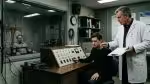
Researchers have found that the brain treats social evaluation as a possible danger. When a person thinks others may judge them, the amygdala becomes active. This part of the brain detects threats and prepares the body for a stress response. Heart rate may increase, muscles may tense, and attention may become more focused.
Studies published by the National Institutes of Health (NIH) show that social rejection activates the same brain regions involved in physical pain. This explains why embarrassment or criticism can feel very uncomfortable even when there is no physical risk.
Brain Areas Involved in Fear of Judgment
| Brain Region | Function | Effect During Social Evaluation |
|---|---|---|
| Amygdala | Detects threat and fear | Increases anxiety when feeling judged |
| Prefrontal Cortex | Decision-making | Analyzes how others may react |
| Anterior Cingulate Cortex | Social pain processing | Activated during rejection |
| Hypothalamus | Stress response control | Releases stress hormones |
These reactions happen automatically, which is why many people feel nervous even when they know the situation is safe.
Early Human Survival Made Social Approval Important

Anthropologists explain that early humans lived in small groups where cooperation was necessary for survival. Rejection from the group could result in the loss of food, protection, or support. As a result, the brain developed strong emotional responses to signs of approval or disapproval.
Scientists believe this survival mechanism still affects modern behavior. Even though today’s social situations are not dangerous, the brain reacts in the same way it did thousands of years ago. This is why public speaking, interviews, or criticism can feel stressful even when no real threat exists.
Childhood Experiences Can Increase Fear of Evaluation
Psychologists say early life experiences play a major role in how strongly a person fears judgment. Parents, teachers, and friends give kids feedback on how their behavior affects others. Frequent criticism or comparison may make a person more sensitive to evaluation later in life.

Research from the Centers for Disease Control and Prevention (CDC) shows that supportive environments in childhood help build confidence and emotional stability, while negative experiences may increase anxiety in social situations.
Personality Traits Linked With Fear of Being Judged
Not everyone reacts the same way to social evaluation. Studies in personality psychology show that some traits make people more likely to worry about what others think.
Common traits associated with a stronger fear of judgment include:
- High self-consciousness
- Low self-confidence
- Strong need for approval
- Sensitivity to criticism
- Tendency to overthink social situations
People with these traits may expect negative reactions even when there is no clear sign of judgment.
Situations Where Fear of Judgment Appears Most Often
Researchers have identified situations in which people feel judged more frequently. These situations usually involve visibility, comparison, or possible consequences.
| Situation | Reason Fear Increases |
|---|---|
| Public speaking | Many people watching |
| Job interviews | Future depends on performance |
| Exams and tests | Results compared with others |
| Social media posts | Feedback is public |
| Meeting new people | First impressions matter |
Because these situations affect reputation or opportunities, the brain reacts more strongly.
Modern Life and Social Media Increased the Feeling of Being Observed
Experts say modern technology has made people more aware of how they appear to others. Large audiences can view photos, opinions, and actions on social media platforms. Likes, comments, and shares, which are visible reactions, can constantly evaluate people.
According to research discussed by the American Psychological Association, frequent online comparison may increase self-consciousness and anxiety, especially among young adults. This constant visibility means the brain receives more signals that others may be judging, which can increase stress.
When Fear of Judgment Becomes Social Anxiety
Fear of evaluation becomes a problem when it starts to affect daily life. Mental health experts describe this condition as social anxiety disorder. Individuals with this condition may avoid public speaking, interacting with strangers, or engaging in activities that could lead to criticism.
Common signs that fear of judgment is becoming excessive include:
- Avoiding social situations frequently
- Feeling intense nervousness before speaking
- Thinking about mistakes for a long time
- Difficulty performing in front of others
- Physical symptoms such as sweating or shaking
The National Institute of Mental Health reports that social anxiety disorder is one of the most common anxiety conditions, but it can be managed with proper treatment and support.
Why This Fear is Still Common Today
Scientists concur that the fear of judgment is an inherent aspect of human psychology. The brain is designed to care about social acceptance because cooperation has always been important for survival. Even in modern life, people depend on approval in the workplace, family, and community.
However, today’s world includes more evaluation than ever before. Schools, jobs, and online platforms constantly measure performance, keeping the brain on alert for potential criticism. Because of this, many people experience fear of judgment even in simple situations.
Understanding the biological, psychological, and social reasons behind this reaction helps explain why it is so common. Experts say the goal is not to remove this feeling completely but to keep it at a level that helps people stay aware without limiting their confidence or growth.