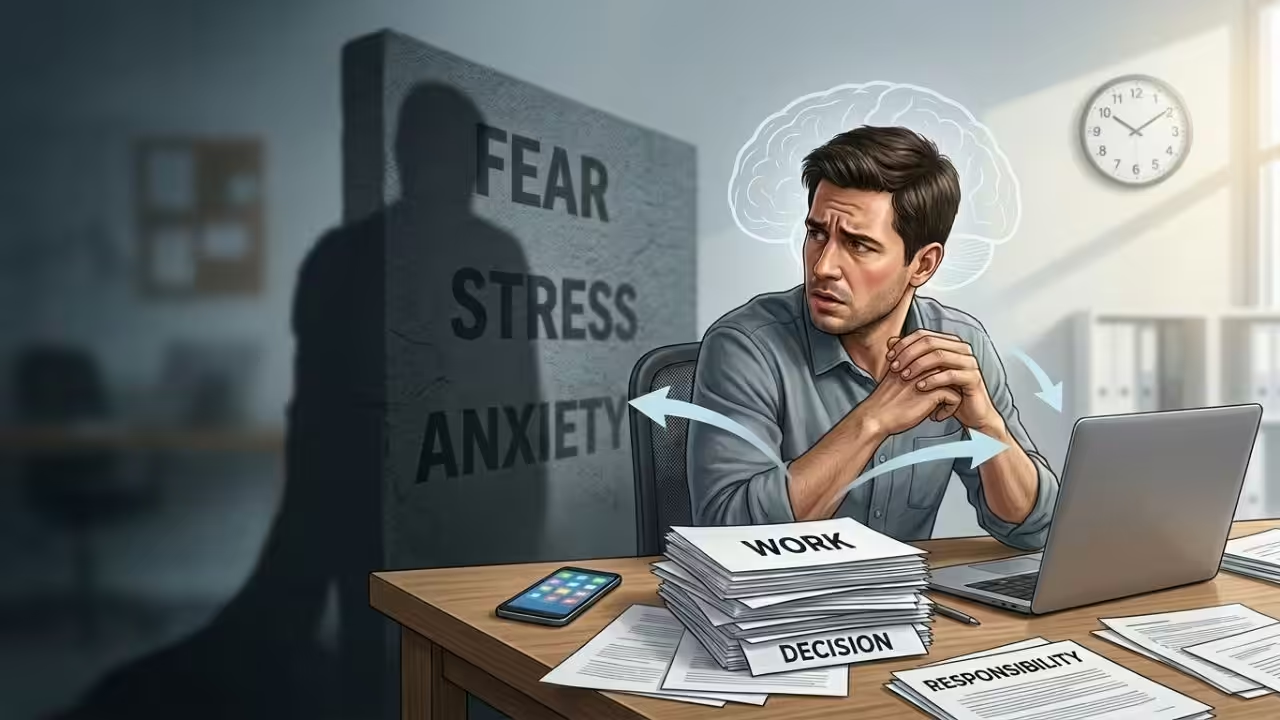
Avoidance behavior is one of the most studied patterns in modern psychology because it affects daily decisions, emotional health, and long-term success. People often delay tasks, avoid difficult conversations, or avoid stressful situations, even when they know the problem will not go away. Psychologists explain that this behavior is not simply laziness but a learned response connected to how the brain reacts to fear and discomfort.
Clinical research indicates a strong correlation between avoidance and anxiety, stress, and the formation of habits. According to behavioral science studies and guidance published by the National Institute of Mental Health – Anxiety Disorders, avoidance responses are part of the brain’s natural defense system, but repeated avoidance can increase anxiety instead of reducing it. Understanding this pattern helps explain procrastination, phobias, and many everyday habits.
Table of Contents
What Psychologists Mean by Avoidance Behavior

In psychological science, avoidance behavior refers to actions taken to escape or prevent unpleasant emotions, thoughts, or situations. These actions may be physical, such as leaving a place, or mental, such as ignoring a problem.
Researchers describe avoidance as a form of negative reinforcement, where a behavior becomes stronger because it removes discomfort. When a person avoids a stressful task and feels relief, the brain records that relief as a reward. Over time, the brain starts automatically choosing avoidance, even when it leads to bigger problems later.
Studies explained by the American Psychological Association – Anxiety show that avoidance is common in anxiety disorders, trauma responses, and stress-related conditions, but it also appears in normal daily life.
Brain Activity Behind Avoidance Responses

Neuroscience research reveals that several brain regions that manage fear, decision-making, and memory control avoidance behavior. These areas work together to decide whether a person should face a situation or escape from it.
| Brain Area | Role in Avoidance |
|---|---|
| Amygdala | Detects threats and activates fear response |
| Prefrontal Cortex | Controls decision-making and risk evaluation |
| Hippocampus | Stores memories of past experiences |
| Basal Ganglia | Creates habits and repeated behavior patterns |
| Anterior Cingulate Cortex | Detects emotional conflict |
When a person faces a stressful situation, the amygdala reacts quickly to possible danger. If past experiences were negative, the hippocampus sends signals that encourage avoidance. Under stress, emotional signals may override logical thinking, which explains why people avoid tasks even when they know avoidance is harmful. Scientific explanations about fear response and brain function are also described by the National Institute of Mental Health – PTSD and Fear Response.
Common Forms of Avoidance Seen in Daily Life
Avoidant behavior does not always look serious. Often, it appears as normal habits that slowly become repeated patterns. Psychologists classify avoidance into different forms depending on how people escape discomfort.

Common examples include:
- Delaying important work or responsibilities
- Avoiding social situations due to fear of judgment
- Ignoring emotional problems instead of discussing them
- Distracting with phones, games, or entertainment
- Refusing to make decisions to avoid stress
These behaviors provide short-term comfort, but research shows they often increase stress later because the original problem remains unresolved.
Why Avoidance Feels Helpful but Causes More Stress
One reason avoidance continues is that it works temporarily. When a person avoids a stressful situation, the body relaxes, and anxiety decreases. The brain remembers this relief and repeats the behavior next time. Psychological research shows a clear difference between short-term and long-term effects.
| Short-Term Effect | Long-Term Result |
|---|---|
| Less anxiety in the moment | Increased fear response |
| Feeling of safety | Reduced confidence |
| Less emotional discomfort | Stronger avoidance habit |
| Delay of a difficult task | Bigger problems later |
| Quick relief | Slower personal growth |
Guidance from the UK National Health Service – Anxiety Overview explains that avoidance keeps the brain from learning that many feared situations are actually manageable, which is why anxiety may grow over time.
How Avoidance Becomes a Habit
Behavioral psychology explains avoidance through learning theory. When a person escapes a stressful situation and feels better, the brain stores that experience as a successful strategy. This process involves conditioning and habit formation.
Over time, the brain starts predicting danger even before the situation happens. This leads to automatic avoidance, especially in people who experience high stress or uncertainty.
Typical patterns seen in learned avoidance include:
- Expecting negative outcomes without evidence
- Feeling anxious before starting a task
- Choosing comfort instead of solving problems
- Repeating the same escape behavior every time
The Centers for Disease Control and Prevention – Mental Health Basics also discusses stress, behavior, and coping patterns.
Methods Psychologists Use to Reduce Avoidance Behavior
Modern psychology uses several evidence-based methods to reduce avoidance. These methods help the brain learn that facing a situation is safer than escaping from it.
One widely used approach is gradual exposure, in which a person gradually faces the feared situation in small steps. This allows the brain to update its memory and reduce the fear response.
Cognitive-behavioral therapy (CBT) is another way to help people identify and replace unrealistic fears with more accurate thoughts. Emotional regulation techniques, including mindfulness, are also used to help individuals tolerate discomfort without avoiding it.
Why Understanding Avoidance Behavior Matters
Avoidance behavior affects education, work performance, relationships, and decision-making. Students may avoid studying difficult subjects, employees may delay important tasks, and individuals may avoid conversations that could solve problems.
Mental health professionals assert that recognizing avoidance patterns constitutes the initial step towards transformation. When people understand that the brain is trying to protect them from discomfort, they can start choosing actions based on long-term benefits instead of short-term relief.
Avoidance Is Natural, but Not Always Helpful
Avoidance behavior is a normal psychological response designed to protect the brain from stress and danger. However, repeated avoidance can increase anxiety, reduce confidence, and prevent personal growth. Scientific research indicates that the brain learns avoidance through reinforcement, memory, and habit formation, which makes the behavior feel automatic.
Mental health authorities such as the World Health Organization – Mental Disorders Fact Sheet note that learning healthy coping strategies is important for long-term emotional stability. When individuals face challenges rather than escape them, the brain learns that discomfort can be managed, leading to greater confidence and better emotional control. Understanding the psychology of avoidance behavior helps explain many everyday struggles and provides practical ways to respond to stress more effectively.