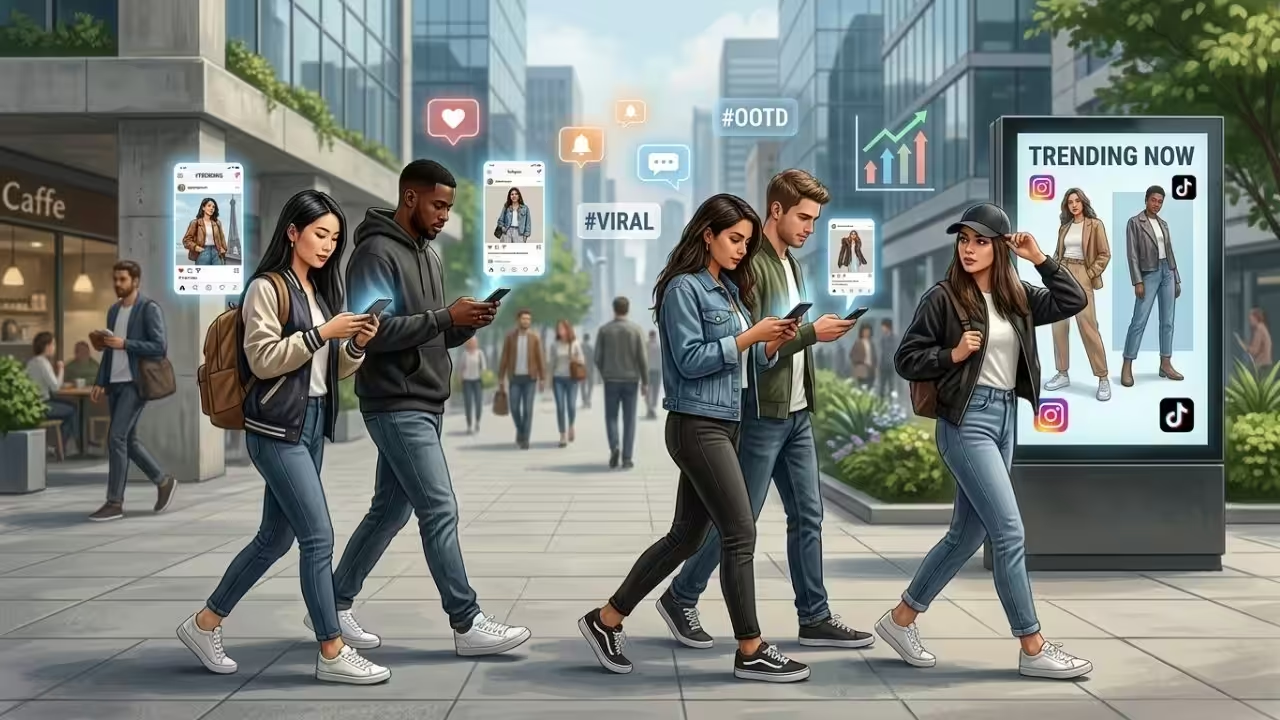
People across the world often adopt the same habits, styles, or opinions at the same time, creating what experts call trends. Psychologists say this behavior is not accidental. Studies in social psychology show that humans naturally look at others before making decisions, especially when they feel uncertain. This tendency helps people adapt quickly in social environments, but it can also lead to copying behavior without careful thinking.
Research from institutions such as the American Psychological Association and the National Institute of Mental Health shows that group influence affects choices across areas such as fashion, technology, health, and even political opinions. With the rise of social media and digital advertising, trends now spread faster than ever, making it important to understand why people follow them.
Table of Contents
Social Influence Plays a Major Role in Decision-Making

Scientists explain that people follow trends mainly because of social influence. Humans evolved as group-living beings, and survival often depended on staying connected with others. As a result, the brain developed a strong response to group behavior.
Psychologists describe two main types of influence. Normative influence happens when people follow trends to fit in, while informational influence occurs when people believe the group knows the correct choice. Behavioral science extensively studies both forms.
According to research published by the American Psychological Association, social influence research shows that individuals often change their opinions when they see a majority choosing something different.
Brain Research Shows Why Popular Choices Feel Safer

Neuroscience studies indicate that the human brain reacts differently when a person agrees with the majority. Brain-imaging experiments found that reward-related areas become more active when people make the same choice as others.
Scientists also found that disagreement with the group activates areas linked to discomfort. Because of this, people often change their decisions to match others, even if their original choice was correct.
| Brain Response | What Happens in the Brain | Effect on Behavior |
|---|---|---|
| Reward activation | Feeling of satisfaction when agreeing | Encourages copying |
| Error signal | Discomfort when disagreeing | Increases conformity |
| Cognitive shortcut | Less effort needed to decide | Makes trends attractive |
| Social awareness | Focus on group opinion | Stronger group behavior |
These responses show that following trends can feel natural because the brain treats group agreement as a safer option.
The Need for Belonging Makes Trends Stronger

Psychologists say humans have a basic need to belong. Following trends helps people feel accepted by their social group. This is why trends often spread quickly among friends, classmates, or coworkers.
Social identity theory explains that people define themselves partly through the groups they belong to. When a trend becomes popular inside a group, following it becomes a way to show loyalty and similarity.
Information from the National Institute of Mental Health’s social behavior and brain research shows that social acceptance strongly affects emotional responses and decision-making.
Media and Social Platforms Make Trends Spread Faster
In the past, trends spread slowly through personal contact. Today, television, online platforms, and digital advertising allow ideas to reach millions of people within minutes. Algorithms often show users content that is already popular, making it appear more important than it actually is.
| Communication Source | Speed of Spread | Audience Reach | Influence Level |
|---|---|---|---|
| Personal contact | Slow | Small | Moderate |
| Television | Medium | National | High |
| Social media | Very fast | Global | Very high |
| Influencers/celebrities | Fast | Large fan base | Extremely high |
Because of this system, people may see the same idea repeatedly, which increases the chance of following the trend.
Situations Where People Are More Likely to Follow Trends
Researchers found that certain situations make trend-following more common. When people feel uncertain or believe others have better information, they depend more on group behavior.
Common situations that increase trend-following include:
- When the decision is confusing or unclear
- When many people seem to agree on one choice
- When the decision is made in public
- When there is fear of missing out
- When the trend looks temporary or limited
These conditions reduce independent thinking and make copying others feel safer.
How Marketing and Advertising Use Trend Psychology
Companies use psychological research to intentionally create trends. Advertisements often depict many people using the products, thereby making them appear popular. This technique is called social proof.
Studies from the U.S. Federal Trade Commission explain that repeated exposure and endorsements can strongly influence consumer decisions.
Influencers, celebrity endorsements, and online reviews collectively enhance the perception of a product’s widespread acceptance. When people think others trust something, they are more likely to follow the trend.
When Following Trends Can Be Helpful – When It Can Be Risky
Following trends is not always harmful. Often, copying others helps people make quick and safe decisions. Public health campaigns, for example, use trends to promote exercise, vaccination, or safety habits.
However, blindly following trends can also lead to mistakes. Financial bubbles, unsafe online challenges, and unhealthy diet trends show how group pressure can spread risky behavior. Experts recommend balancing social influence with independent thinking.
Understanding Trends Helps People Make Better Choices
Experts agree that people follow trends for a variety of reasons, including social influence, brain responses, emotional needs, and modern communication systems. The human brain naturally looks to others’ actions to reduce uncertainty, which makes trend-following a natural part of behavior.
In today’s digital world, trends spread faster than ever, but the psychological reasons behind them remain the same. Understanding how trends work can help individuals make smarter decisions while still benefiting from shared knowledge and social connections.