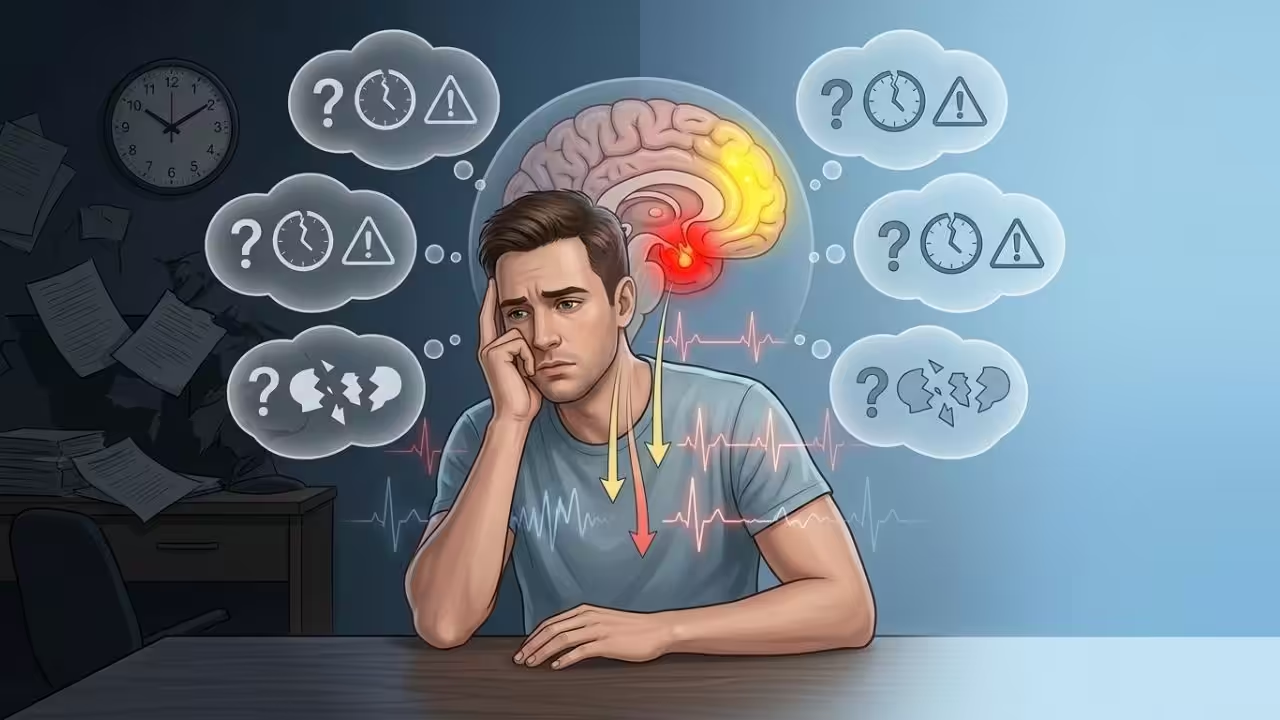
Rumination, a psychological pattern in which people repeatedly reflect on the same negative events or worries, is increasingly being linked with higher stress levels in scientific research. Mental health studies show that when the brain keeps replaying problems without finding solutions, the body continues to react as if the threat is still present. This prolonged reaction can increase fatigue, anxiety, and emotional tension.
Researchers in cognitive psychology and neuroscience report that rumination can keep the stress response active for longer than necessary. According to the National Institute of Mental Health, long-lasting stress responses can affect sleep, mood, and overall health.
Table of Contents
What Psychologists Mean by Rumination

In psychological research, rumination refers to repetitive and passive thinking about distress, past mistakes, or future worries. Unlike problem-solving, rumination does not lead to decisions or actions. Instead, the mind returns to the same thoughts again and again, often increasing emotional discomfort.
Clinical studies indicate that rumination is common after stressful situations such as conflicts, failures, or uncertainty about the future. The American Psychological Association explains that repeated negative thinking can increase emotional pressure and make it harder for the brain to recover from stress. Official guidance on stress effects and coping methods is available on APA’s “Stress Effects on the Body” page. People who frequently ruminate often report feeling mentally tired even when there is no immediate problem, because the brain continues to process the same emotional information.
How the Brain Reacts During Rumination
The human stress response is controlled by a system involving the brain, hormones, and nervous system. When the brain senses danger, it activates the hypothalamus–pituitary–adrenal (HPA) axis, which releases cortisol and adrenaline. These hormones prepare the body to react quickly.

When rumination occurs, the brain may trigger the same response repeatedly, even in the absence of real danger. This keeps the body in a state of alertness, preventing proper recovery.
Biological changes linked with rumination
| Body system | What happens | Effect on stress |
|---|---|---|
| HPA axis | Remains active longer | Prolonged stress response |
| Cortisol level | Stays elevated | Fatigue and tension increase |
| Amygdala | Fear center becomes more active | Strong emotional reactions |
| Prefrontal cortex | Overloaded by repeated thinking | Reduced mental control |
| Sleep cycle | Harder to relax at night | Slow recovery |
Health authorities such as the Centers for Disease Control and Prevention note that long-term stress can affect the heart, immune system, and sleep quality.
Common Situations That Trigger Repetitive Thinking
Rumination often starts after events that feel emotionally important or uncertain. The brain tries to understand the situation, but instead of solving the problem, the thinking becomes repetitive.
- Arguments with family or coworkers
- Mistakes at work or school
- Worry about health, money, or career
- Thinking about past failures
- Uncertainty about future decisions

These situations are normal parts of life, but repeated contemplation of them can increase stress more than the events themselves.
Why Rumination Makes Stress Last Longer
Short-term stress usually ends when the situation is over. Rumination prevents this recovery. When the mind keeps replaying the same thoughts, the body continues to release stress hormones.
Researchers explain that chronic stress develops when the nervous system does not return to its normal state. The World Health Organization states that long-term stress can affect both mental and physical health, including sleep, mood, and energy levels.
Rumination also reduces attention and concentration. When the brain is busy repeating the same thoughts, it has fewer resources for solving current problems. Such behavior can lead to more mistakes, which then create more stress.
Difference Between Reflection and Rumination
Not all thinking about problems is harmful. Reflection can help people learn from experience, but rumination keeps the mind stuck without progress.
| Feature | Reflection | Rumination |
|---|---|---|
| Thinking style | Active and solution-focused | Passive and repetitive |
| Emotional effect | Often calming | Often increases stress |
| Goal | Understand and improve | Replay without solution |
| Result | Leads to action | Leads to worry |
| Stress level | Usually decreases | Usually increases |
Understanding this difference helps explain why some people recover from stress quickly while others remain tense for long periods.
Effects of Long-Term Rumination on Mental Health
Frequent rumination is associated with anxiety disorders, depression, and burnout, according to research. Repetitive thinking keeps the brain focused on negative emotions, making it harder to relax. Sleep problems are also common because the mind stays active at night.
Mental health specialists report that people who ruminate often feel worn out, irritable, and unable to concentrate. Over time, this can affect work performance, relationships, and overall well-being.
Studies also show that rumination-induced stress can become a cycle. Stress increases negative thinking, and negative thinking increases stress. Breaking this cycle is important for emotional stability.
How Reducing Rumination Helps the Brain Recover
Psychological research shows that when repetitive thinking decreases, the nervous system can return to balance. Cortisol levels drop, emotional centers become less active, and the brain can focus more clearly.
- Shifting attention to physical activity
- Writing down worries to organize thoughts
- Practicing slow breathing or relaxation
- Focusing on present tasks
- Limiting time spent thinking about problems
These methods are commonly used in stress-management programs because they reduce the mental repetition that keeps stress active.
Why Controlling Rumination is Important for Stress Management
Scientific evidence indicates that rumination increases stress by keeping the brain in a constant state of alertness. Repetitive negative thinking activates the same biological systems that respond to danger, even when no real threat exists. Over time, this can turn short-term pressure into chronic stress, affecting sleep, mood, and health.
Understanding rumination helps explain why stress sometimes lasts longer than expected. The problem is not always the situation itself, but the way the mind keeps returning to it. When repetitive thinking is reduced, the brain can recover, allowing the body to relax and respond to challenges in a healthier way.
Because of its strong effect on mental and physical health, psychologists consider controlling rumination one of the key steps in reducing long-term stress.