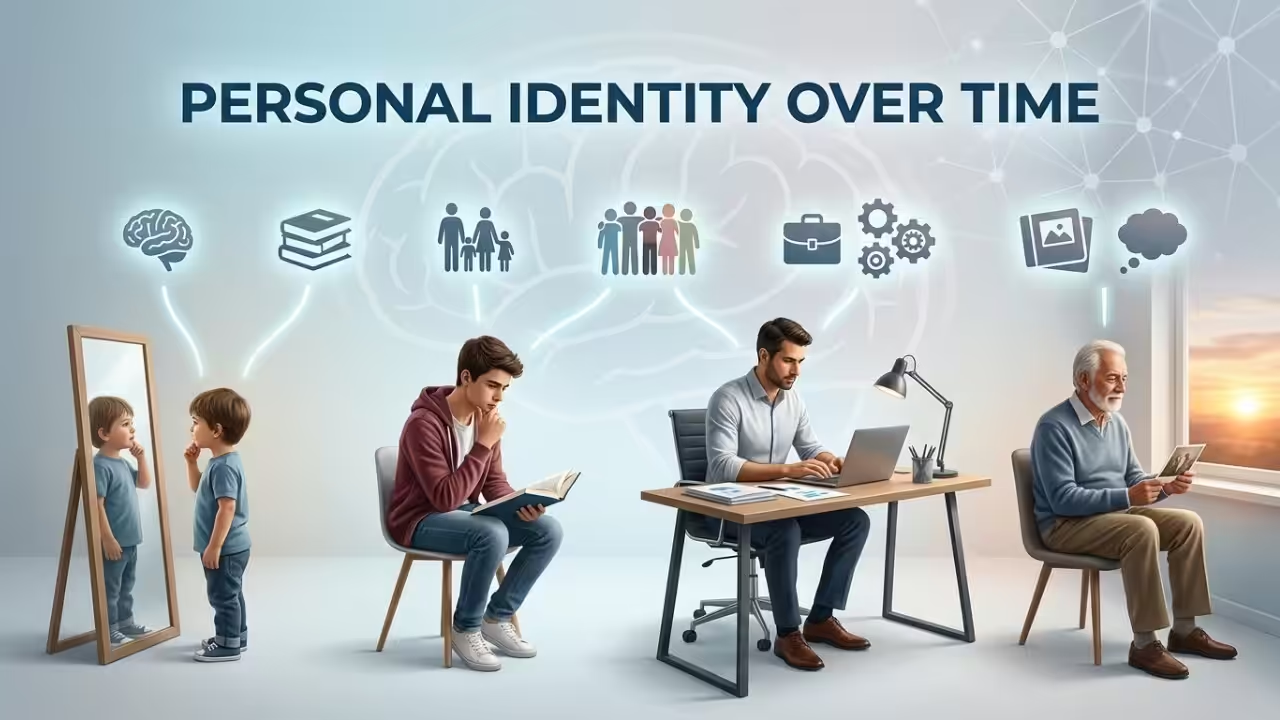
Personal identity is not created in a single moment. Researchers in psychology and sociology explain that identity develops slowly across childhood, adolescence, and adulthood as people gain experiences, form relationships, and assume social roles. Experts describe identity as the combination of personality, memories, beliefs, and social connections that help a person understand who they are.
Modern developmental studies indicate that identity formation is a lifelong process influenced by family environment, culture, education, and personal choices. According to research shared by the U.S. National Library of Medicine, identity continues to change even in adulthood as people adapt to new responsibilities and life events.
Table of Contents
What Experts Mean by Personal Identity

Psychologists define personal identity as the stable sense of self that allows individuals to recognize their values, goals, and role in society. This includes self-concept, personality traits, social belonging, and life experiences. Identity helps people make decisions, build relationships, and maintain emotional stability.
Researchers explain that identity has two main parts: personal identity and social identity. Personal identity includes individual characteristics such as beliefs and abilities, while social identity includes group membership such as nationality, profession, or religion. Studies available through the National Institute of Mental Health show that both parts work together to form a complete sense of self.
Identity Begins in Childhood, According to Developmental Research
Identity formation starts in early childhood when children first recognize themselves as separate individuals. Family interaction, language development, and early education help children understand basic ideas about who they are. Psychologists say that supportive environments during childhood help build confidence and emotional security.

Children often learn identity through observation. They copy behavior from parents, teachers, and other adults, which helps them understand social rules. Developmental research published by the U.S. Department of Health & Human Services explains that early emotional support plays a major role in the development of self-esteem and personality.
Influences during childhood
- Family environment and parenting style
- Early education and social learning
- Cultural values and traditions
- Emotional support and security
These early influences often remain important throughout life because they create the foundation for future personality development.
Adolescence is the Most Important Stage for Identity Formation
Most psychological studies identify adolescence as the stage when identity becomes clearer. Teenagers begin to question their beliefs, explore different roles, and decide who they want to become. Increased independence and decision-making are often associated with this stage.

Research from the National Institutes of Health shows that brain development during the teenage years enables individuals to think more deeply about their futures, values, and goals. Because of this, adolescence is considered the most critical period for forming a strong sense of self.
| Stage | Main Identity Activity | Common Influence |
|---|---|---|
| Childhood | Learning self-awareness | Family, school |
| Adolescence | Exploring roles | Friends, education |
| Young adulthood | Career and relationships | Work, independence |
| Middle age | Responsibility | Family, society |
| Older age | Reflection | Life experience |
This pattern shows that identity continues to develop throughout life.
Society and Culture Strongly Shape Who We Become
Identity does not develop in isolation. Social expectations, culture, education systems, and economic conditions all influence how people define themselves. Individuals raised in different environments often develop different values and behaviors.
According to U.S. Census Bureau research, social background and community structure affect career choices, educational attainment, and lifestyle decisions, all of which contribute to identity development. Even language and traditions can shape how people see themselves.
People also define themselves through group membership. Being part of a family, profession, or community provides individuals a sense of belonging, which strengthens identity.
Major Factors That Influence Personal Identity
Identity changes because people constantly face new situations. Scientists say that both internal traits and external experiences shape the sense of self.
| Factor | How it affects identity |
|---|---|
| Family upbringing | Builds early beliefs |
| Education | Shapes knowledge and goals |
| Culture | Influences values |
| Friends and society | Affects behavior |
| Life events | Cause change and growth |
These factors work together throughout life, which explains why identity is never completely fixed.
Why Identity Still Changes in Adulthood
Many people believe identity stops developing after teenage years, but research indicates that it continues to evolve. Career changes, marriage, parenthood, and social responsibilities often cause adults to rethink their goals and priorities.
Psychological studies from the National Institute on Aging show that adults become more emotionally stable, but their identity can still change when they encounter new experiences. This adaptability enables individuals to navigate various circumstances while preserving their fundamental identity.
Major life events, such as moving to another country, changing professions, or facing health challenges, can reshape how individuals see themselves.
Human Side of Identity Development
Identity is not only a scientific concept. In daily life, people often notice changes in themselves after important experiences. A student may feel different after starting a career, a parent may develop new priorities, and older adults may see life differently after retirement.
These changes show that identity grows with experience. Instead of losing their sense of self, people often develop a deeper understanding of who they are. This process helps individuals maintain emotional balance as they adapt to new roles.
Psychologists say that healthy identity development requires both stability and change. A person needs a clear sense of self and the ability to grow when life changes.
Identity is a Lifelong Process, Not a Fixed Trait
Scientific research confirms that personal identity forms gradually and continues to develop throughout life. Childhood experiences lay the foundation, adolescence shapes direction, and adulthood brings adjustments in response to real-world responsibilities.
Family, culture, education, and personal choices all play important roles in shaping identity. Because life never stays the same, identity also continues to change. This lifelong development allows people to remain connected to their past while still adapting to new situations, which is why experts consider identity one of the most dynamic parts of human psychology.