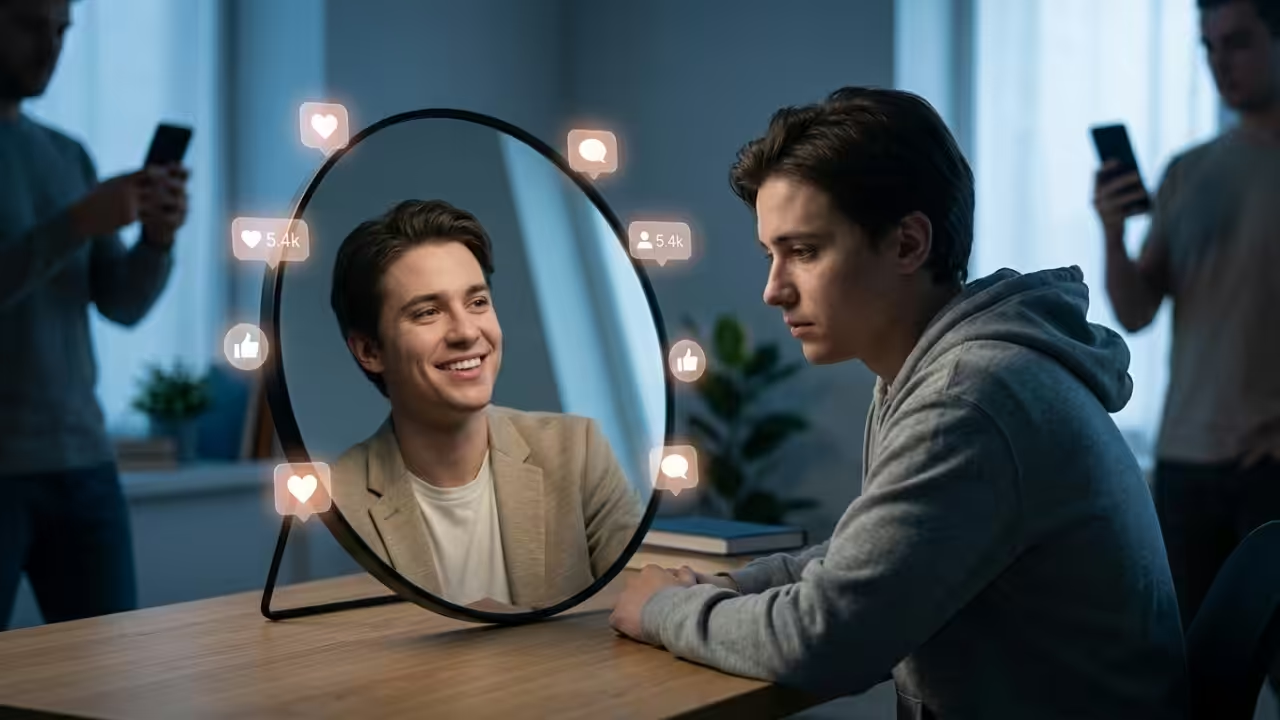
Public image has become a major factor influencing how people evaluate themselves, especially in an era where social media, online communication, and public visibility are part of everyday life. Psychologists have long studied the connection between social perception and self-esteem, but recent research shows that the influence of public image on self-worth has grown significantly with the rise of digital platforms and performance-based social environments.
Mental health experts report that individuals today are more likely to judge their value based on feedback from others, including likes, comments, achievements, and reputation. The World Health Organization’s guidance strongly links self-esteem and self-worth to social experiences, recognition, and acceptance. This growing dependence on external validation is now considered an important factor in emotional well-being and psychological stability.
Table of Contents
What Psychologists Mean by Public Image and Self-Worth

Others perceive a person based on their appearance, behavior, communication, and achievements, which together form a person’s public image. It can be shaped by direct interactions, workplace performance, community reputation, and online presence. In modern society, public image is often visible to a much larger audience than in the past, which increases its influence on personal identity.
Self-worth, on the other hand, is the internal sense of value a person assigns to themselves. According to mental health information published by the U.S. National Institute of Mental Health (NIMH), self-esteem and self-worth develop through a combination of personal experiences, relationships, and social feedback.
When public image becomes closely connected to self-worth, individuals may start judging their value based on how they think others see them rather than on their beliefs.
Social Media has Increased Pressure to Maintain a Perfect Image
Researchers say that social media has changed the way public image is created and maintained. Platforms allow people to present selected moments of success, happiness, or achievement, which can create unrealistic expectations. Because these images are visible to many people, individuals may feel pressure to maintain a certain reputation.
Studies based on social comparison theory show that people naturally compare themselves with others when information is easily available. Online environments make comparisons constant, which can influence confidence and emotional stability.
| Social Media Activity | How It Shapes Public Image | Possible Effect on Self-Worth |
|---|---|---|
| Posting achievements | Seen as success or status | May increase pressure to perform |
| Tracking likes and comments | Visible approval | Can affect confidence levels |
| Viewing others’ success | Encourages comparison | May reduce self-satisfaction |
| Editing photos or content | Creates ideal image | May lead to unrealistic standards |
Mental health guidance from the American Psychological Association notes that frequent comparison and dependence on online feedback can affect mood and self-confidence.
Why Humans Naturally Connect Self-Worth With Public Approval

Psychologists explain that the need for social approval is part of human behavior. Acceptance by a group has always been important for survival, which is why people feel positive when they receive praise and uncomfortable when they face rejection. Because of this natural tendency, many individuals connect their self-worth with how others respond to them.
In schools, workplaces, and social groups, recognition often becomes a measure of success. While this can motivate people to improve, it can also create emotional instability if self-worth depends solely on public opinion.
Common situations where public image strongly affects self-worth include:
- Checking reactions to posts or achievements repeatedly
- Feeling anxious about how others might judge one’s appearance
- Avoiding failure because it could damage the reputation
- Comparing success with friends or coworkers
- Feeling confident only after receiving praise
These patterns show how external feedback can influence personal confidence when internal self-worth is not strong.
Research Shows Strong Link Between Self-Esteem and Social Feedback
Scientific research has repeatedly shown that social feedback plays a major role in self-evaluation. According to mental health resources from the Centers for Disease Control and Prevention, positive relationships and supportive environments help build healthy self-esteem, while negative experiences may lower confidence.
| Situation | Immediate Emotional Response | Possible Long-Term Effect |
|---|---|---|
| Public criticism | Stress or embarrassment | Lower self-confidence |
| Lack of recognition | Disappointment | Reduced motivation |
| Constant comparison | Dissatisfaction | Negative self-image |
| Pressure to appear perfect | Anxiety | Emotional exhaustion |
Experts note that these effects are more common when individuals gauge their value mainly through public reaction rather than personal beliefs.
When Public Image Becomes More Important Than Identity
Mental health specialists warn that focusing too much on public image can make people lose touch with their true selves. When individuals feel they must always look successful, confident, or happy, they may hide problems or avoid honest communication.
Studies in behavioral psychology indicate that maintaining a flawless image can induce stress due to the need for continuous effort. People may avoid situations where mistakes are possible, which can limit personal growth and learning. Over time, these characteristics can affect relationships, career decisions, and emotional well-being.
Experts say that healthy self-worth comes from a balance between external feedback and internal values. Public image can influence confidence, but it should not be the only source of personal value.
How Experts Recommend Building Stable Self-Worth
Psychological studies suggest that stable self-worth develops when individuals focus on internal goals rather than on public recognition alone. People who base their value on personal growth, skills, and meaningful relationships tend to show stronger emotional stability.
Mental health organizations recommend several practices that help reduce dependence on public image:
- Setting personal goals instead of only seeking approval
- Accepting both strengths and weaknesses
- Limiting constant comparison with others
- Building supportive relationships
- Focusing on long-term learning rather than short-term praise
These practices help individuals maintain confidence even when public opinion changes.
Public Image Matters, But it Should Not Define Self-Worth
Public image has always influenced how people see themselves, but its impact has increased in a world where social visibility is constant. Research from mental health organizations shows that approval, criticism, and comparison can affect self-worth, especially when individuals depend heavily on external validation.
Experts agree that confidence becomes more stable when it is grounded in personal values, experiences, and self-acceptance rather than solely in public perception. In a society where reputation can change quickly, understanding the difference between public image and personal identity is essential for maintaining emotional balance and long-term well-being.