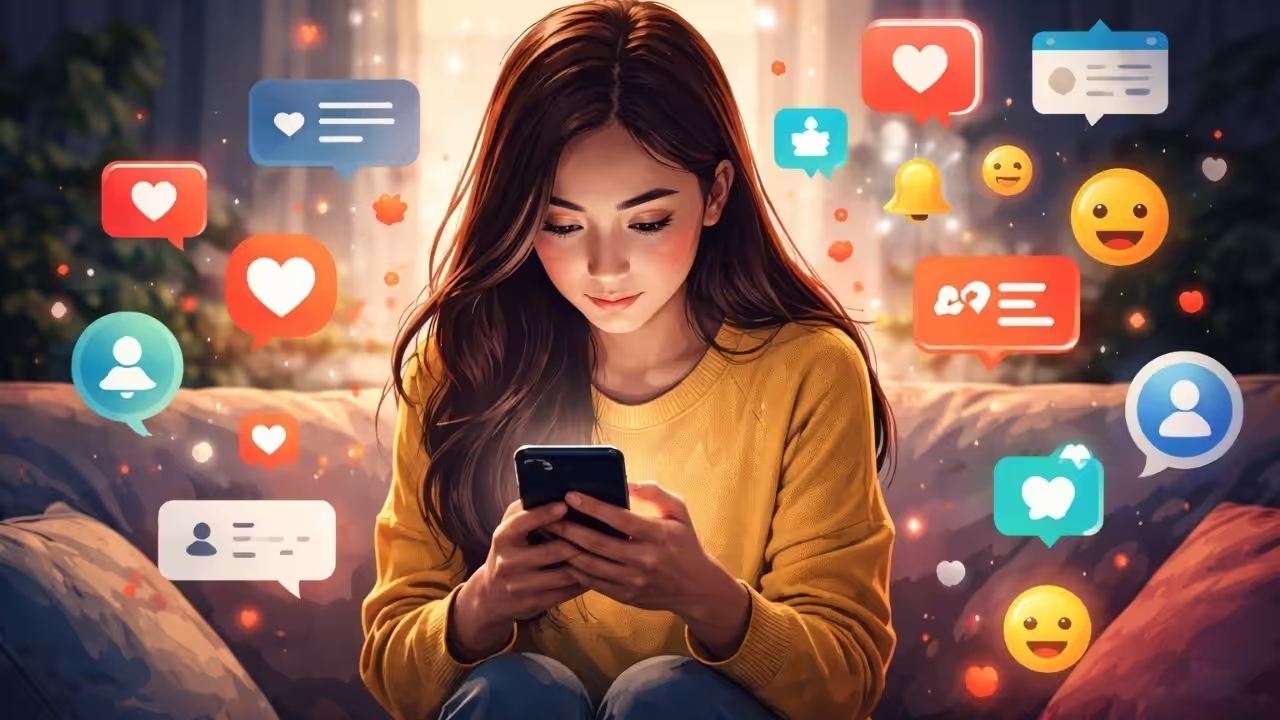
Social media has become a central part of modern life, shaping how people communicate, learn, and interact with the world. According to global digital reports, over 4.9 billion people use social media sites every day, spending an average of 2.5 hours a day scrolling, sharing, and responding to content online.
While these platforms provide opportunities for connection and information sharing, mental health experts and researchers are increasingly examining how constant digital interaction affects emotional well-being. Studies conducted by organizations such as the American Psychological Association and the World Health Organization indicate that the psychological impact of social media is complex, with both positive and negative outcomes depending on how individuals use these platforms.
Table of Contents
Global Social Media Usage and Daily Exposure

The scale of social media engagement explains why psychologists consider it a major influence on human behavior. Smartphones and mobile internet have enabled continuous digital interaction, allowing people to stay connected to social media from morning until late at night.
| Indicator | Estimated Global Data |
|---|---|
| Total social media users | Over 4.9 billion |
| Average daily time spent on social platforms | Around 2 hours 20 minutes |
| Percentage of internet users on social media | Approximately 60% |
| Average number of platforms used per person | 6–7 platforms |
Researchers from the Pew Research Center note that younger users often spend even more time online, particularly on video-based platforms where content updates rapidly.
How Online Feedback Influences Human Psychology
Interaction and feedback form the foundation of social media platforms. Likes, comments, shares, and follower counts act as signals of social approval. Behavioral scientists have found that these feedback systems can activate brain reward circuits associated with dopamine release.
Dopamine is associated with motivation and pleasure, according to the National Institute of Mental Health. When individuals receive positive feedback online, the brain interprets it as a rewarding experience, encouraging repeated engagement. This is one reason many users check notifications frequently throughout the day.
However, this digital feedback loop can also increase emotional sensitivity. Negative comments, low engagement, or online criticism may influence mood and self-perception, particularly among younger users who are still forming their identities.
Social Comparison and the Pressure of Online Perfection
One of the most frequently discussed psychological effects of social media is the tendency for users to compare their lives with those of others. Social platforms often highlight curated moments such as achievements, vacations, or celebrations.
When individuals repeatedly view these selective snapshots, they may develop unrealistic expectations about everyday life. Research highlighted by the Centers for Disease Control and Prevention suggests that excessive social media comparison can contribute to feelings of inadequacy or dissatisfaction among some users.
At the same time, experts emphasize that not all comparisons are harmful. For some individuals, seeing others’ achievements can serve as a source of motivation for personal growth. The psychological outcome often depends on how users interpret and engage with the content they encounter, as positive interpretations can lead to increased motivation and a sense of community.
Positive Psychological Benefits of Social Media
Despite the concerns surrounding social media, research also highlights several constructive psychological benefits. Online communities can help individuals build relationships, share experiences, and access valuable information.
Some commonly reported positive outcomes include:
- Access to mental health support groups and peer communities
- Opportunities for creative expression and knowledge sharing
- Maintaining connections with friends and family across distances
- Increased awareness of public health information and social issues
For instance, the COVID-19 pandemic necessitated the use of digital platforms as a vital means of communication, as physical interaction became scarce.
Mental Health Risks Linked to Excessive Use
While moderate use can offer benefits, excessive or unregulated engagement may introduce psychological challenges. Continuous scrolling, late-night device use, and exposure to emotionally intense content can influence stress levels and sleep quality.
Mental health researchers frequently highlight several risks associated with heavy social media use:
- Sleep disruption caused by late-night screen exposure
- Fear of missing out (FOMO) triggered by constant updates
- Increased exposure to cyberbullying or online harassment
- Reduced attention span due to fast-paced content consumption
These effects are particularly significant for adolescents and young adults, who tend to use social media more intensively than older age groups.
Age Groups and Different Psychological Responses
The psychological influence of social media varies across age groups. Younger users often rely on digital platforms for social identity and peer interaction, while older adults tend to use them more selectively, often focusing on maintaining connections with family and friends rather than seeking new social interactions.
| Age Group | Typical Use | Common Psychological Outcome |
|---|---|---|
| Adolescents (13–18) | Social interaction, entertainment | Sensitivity to peer approval and online feedback |
| Young Adults (19–29) | Networking, lifestyle sharing | Increased social comparison |
| Adults (30–49) | Information and professional communication | Information overload |
| Older Adults (50+) | Staying connected with family | Reduced feelings of isolation |
These patterns highlight that psychological outcomes depend heavily on individual behavior, digital literacy, and life stages.
Balanced Digital Habits Can Reduce Negative Effects
Mental health professionals increasingly recommend developing balanced digital habits rather than avoiding social media entirely. Limiting screen time, managing notifications, and taking regular breaks from devices can help maintain emotional balance.
Organizations such as the World Health Organization and the American Psychological Association also encourage individuals to pay attention to how social media use affects their mood, sleep patterns, and daily productivity.
Understanding the Human Side of Social Media
Social media has transformed communication across the globe, allowing people to connect instantly and access information in ways that were impossible just a few decades ago. For many individuals, these platforms are valuable tools for learning, networking, and staying connected with loved ones.
At the same time, the psychological effects of constant digital interaction remain an important area of research. Studies show that social media can influence emotions, self-perception, and attention patterns, particularly when usage becomes excessive or comparison-driven.
As digital technology continues to evolve, experts emphasize the importance of mindful engagement. By understanding both the benefits and risks, individuals can use social media to support connection, creativity, and well-being while minimizing potential psychological stress.