Emotional resilience has become one of the most studied topics in modern psychology as researchers try to understand why some individuals remain stable during stress while others struggle with anxiety, burnout, or emotional exhaustion. Research indicates that resilience is not merely a personality trait but a multifaceted process encompassing neural activity, hormonal influences, learning mechanisms, and social support systems. As workplaces, schools, and daily life become more demanding, the ability to recover quickly from pressure is now considered an essential mental skill.
Research published by institutions such as the National Institute of Mental Health and the American Psychological Association explains that resilience helps individuals adapt to change, trauma, and uncertainty without losing emotional balance. Experts also emphasize that resilience can be developed over time through experience, training, and supportive environments rather than being something people are born with.
Table of Contents
What Scientists Mean by Emotional Resilience

In psychological research, emotional resilience refers to the ability to adjust to difficult situations and return to normal functioning after stress. According to the American Psychological Association’s resilience guide, resilience includes behaviors, thoughts, and actions that can be learned and strengthened over time.
Researchers describe resilience as a combination of emotional regulation, flexible thinking, and problem-solving ability. People with strong resilience do not avoid stress, but they respond to it in a controlled way. Longitudinal studies indicate that resilient individuals exhibit a reduced likelihood of developing severe depression, chronic anxiety, or stress-related health issues.
Scientists also note that resilience changes across life stages. Children, adults, and older people may respond differently to the same situation depending on experience, health, and social support.
Brain Science Behind Emotional Stability

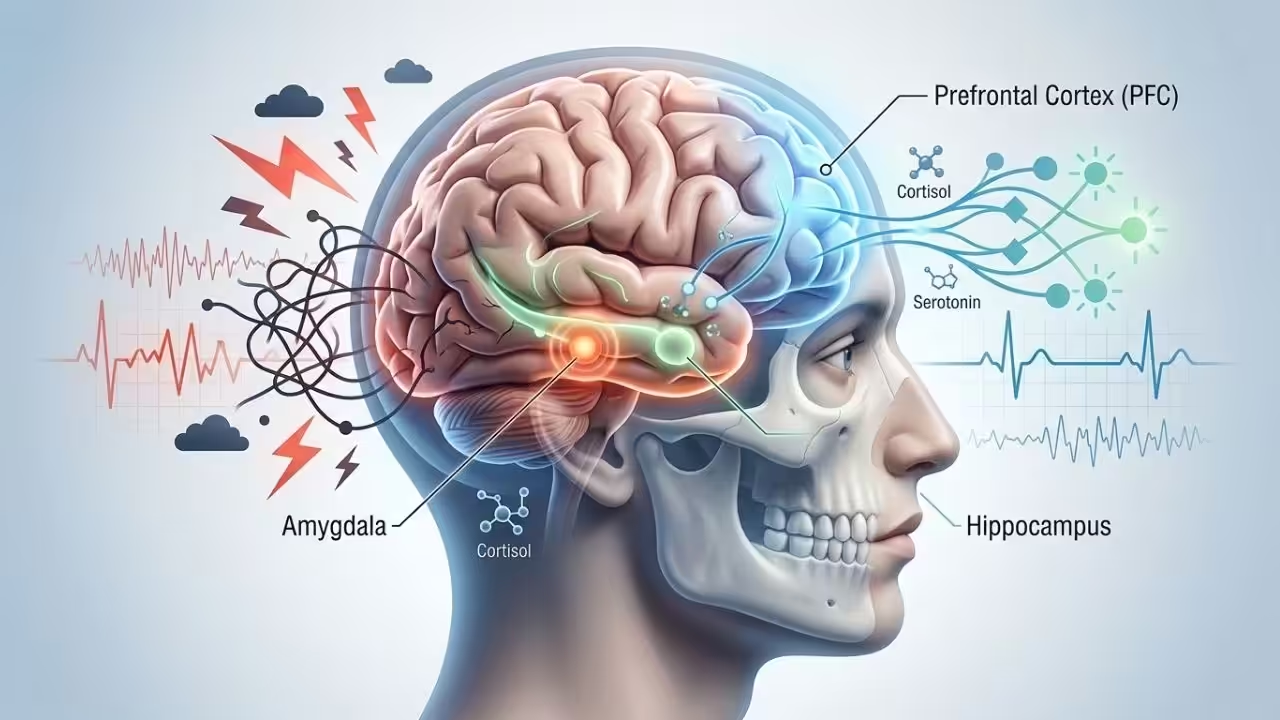
Neuroscience research has identified several brain regions that influence how people react to stress. The balance between these regions determines whether a person feels overwhelmed or remains calm under pressure.
| Brain Area | Role in Stress Response | Effect on Resilience |
|---|---|---|
| Prefrontal Cortex | Controls decision-making and emotional regulation | Higher activity improves control |
| Amygdala | Detects danger and triggers fear | Overactivity increases anxiety |
| Hippocampus | Helps learn from past experience | Supports adaptation |
| Hypothalamus | Controls hormone release | Regulates stress response |
| Anterior Cingulate Cortex | Maintains emotional balance | Helps focus during stress |
Brain imaging studies supported by the National Institute of Mental Health’s brain research resources show that resilient individuals often exhibit stronger communication between the prefrontal cortex and the amygdala, allowing them to control fear and respond more rationally.
Hormones and the Body’s Stress System
The body reacts to stress through the hypothalamic-pituitary-adrenal (HPA) axis, which releases hormones such as cortisol and adrenaline. These hormones prepare the body to react quickly, but long-term stress can damage both physical and mental health.

Short bursts of stress are normal, but prolonged high cortisol levels can affect memory, sleep, and immune function. Research shows that emotionally resilient people return to normal hormone levels faster after stressful events. This quick recovery protects the brain from long-term damage.
Scientists also link resilience with better heart health, stronger immunity, and lower risk of stress-related illness.
Psychological Skills That Help People Stay Strong
Researchers have identified several mental abilities that are commonly found in resilient individuals. These skills help people manage pressure without becoming emotionally overwhelmed.
- Emotional regulation, which allows control over reactions
- Cognitive flexibility, which helps adjust thinking when situations change
- Realistic optimism, which supports motivation without ignoring facts
- Self-confidence in problem-solving
- Ability to ask for help and use social support
Training programs recommended by the Centers for Disease Control and Prevention’s stress and coping resources demonstrate the development of these skills through practice, education, and supportive environments.
Life Experiences That Build Resilience
Psychologists say resilience develops through experience rather than appearing suddenly. Facing manageable challenges helps the brain learn how to cope with stress more effectively. This process is often called stress adaptation.
Several conditions are linked with stronger emotional resilience:
- Supportive relationships during childhood
- Opportunities to solve problems independently
- Safe environments with guidance and structure
- Education that teaches coping skills
- Positive social connections in adulthood
Developmental studies referenced by the National Institute of Child Health and Human Development’s child development research show that early support plays a major role in emotional regulation later in life. Even when early life is difficult, therapy, education, and strong relationships can improve resilience in adulthood.
Resilience vs Suppression: A Key Difference
Many people believe that strong individuals simply ignore emotions, but scientific research shows that suppression and resilience are distinct.
| Response Type | Description | Long-Term Result |
|---|---|---|
| Emotional Resilience | Healthy recovery after stress | Stable mental health |
| Emotional Suppression | Hiding or blocking feelings | Higher stress levels |
| Emotional Avoidance | Ignoring problems | Risk of anxiety |
| Adaptive Coping | Facing stress with strategies | Stronger stability |
Clinical guidance from the National Institute of Mental Health for anxiety and coping information explains that avoiding emotions can increase long-term psychological stress.
Why Emotional Resilience Matters in Modern Life
Recently, emotional resilience has become a focus in education, healthcare, and workplace research. High workloads, digital pressure, and constant change make stress more common than in the past. Because of this, organizations now train employees and students to develop coping skills.
Public health programs supported by the World Health Organization’s mental health resources highlight resilience as an important factor in preventing long-term psychological problems.
Studies indicate that people with strong resilience report better job performance, fewer mental health disorders, and higher life satisfaction. Communities with strong social connections also recover faster from disasters and economic crises.
Resilience Is a Skill That Can Grow Over Time
Scientific research shows that emotional resilience is not a rare quality but a skill that develops through brain function, life experience, and social support. People who learn to regulate emotions, adapt to change, and seek help when needed are more likely to remain stable during difficult situations.
Modern psychology views resilience as something people can develop. Instead, it is understood as a process that can grow throughout life. Research from organizations such as the American Psychological Association, the National Institute of Mental Health, and the World Health Organization confirms that resilience can be strengthened through learning, healthy relationships, and repeated adaptation to challenges.
As stress becomes a normal part of modern life, emotional resilience is increasingly recognized as one of the most important abilities for maintaining long-term mental and physical health.