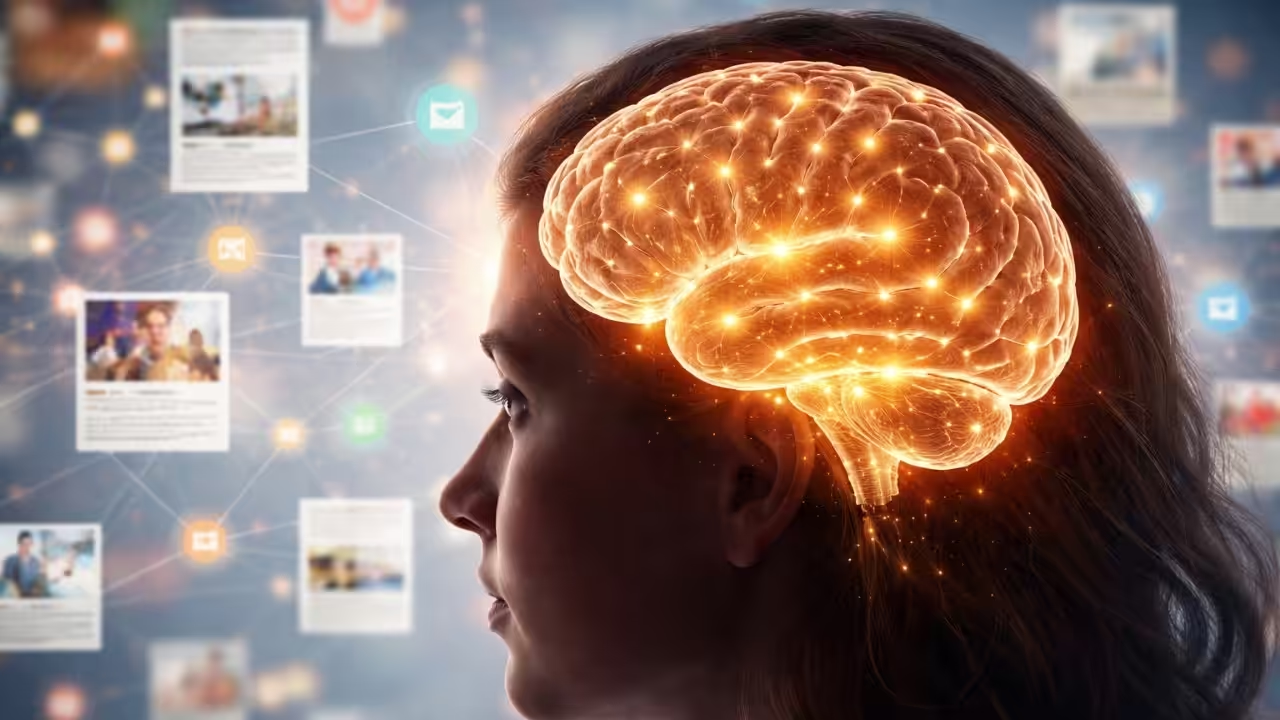
Human decision-making is often viewed as logical and evidence-based, but psychological research shows that people frequently trust information that feels familiar rather than information that is objectively correct. Cognitive scientists have observed that repeated exposure to the same message can enhance the probability of acceptance, even in the absence of corroborating evidence.
This tendency is rooted in how the brain processes large amounts of information. Because evaluating every new idea in detail would require significant mental effort, the brain relies on shortcuts to make quick judgments. Familiarity becomes one of the strongest signals guiding those judgments, which explains why repetition in media, advertising, and everyday conversations can shape beliefs.
Table of Contents
How the Brain Uses Cognitive Shortcuts

The human brain is designed for efficiency. According to neuroscience research, the brain represents about 2 percent of body weight but consumes roughly 20 percent of the body’s energy. Because of this high energy demand, the brain often favors quick interpretations rather than detailed analysis.
Psychologists refer to these shortcuts as heuristics, which allow people to make rapid decisions without evaluating every piece of evidence. The brain processes information more easily when it encounters it repeatedly. This ease of processing, known as processing fluency, creates a sense that the information is reliable.
The Illusory Truth Effect: Why Repetition Feels Like Evidence
One of the most widely studied psychological effects related to familiarity is the illusory truth effect. Researchers have shown that people are more likely to rate repeated statements as true, even when those statements were initially identified as false.

Experiments conducted in cognitive psychology labs demonstrate that familiarity influences perceived truth because repeated statements require less mental effort to interpret. When a statement feels simple to process, the brain often interprets that ease as a sign of credibility.
Factors That Make Familiar Information Seem More Trustworthy
| Psychological Factor | What Happens in the Brain | Resulting Perception |
|---|---|---|
| Repetition | Neural pathways strengthen with repeated exposure | Message becomes easier to process |
| Processing fluency | Information feels simple and recognizable | Familiar claims appear believable |
| Recognition memory | Brain recalls seeing the statement before | Familiarity may be mistaken for truth |
| Reduced cognitive effort | Less mental evaluation required | Faster acceptance of information |
These mechanisms explain why repeated messages, whether in advertising, political messaging, or social media, can gradually influence how people judge information.
Memory Recognition Often Replaces Careful Recall
Human memory relies on two different processes: recollection and recognition. Recollection involves remembering details about when and where information was learned. Recognition, by contrast, is simply the feeling that something has been encountered before.

Recognition is much faster and requires less cognitive effort than recollection. Because of this, the brain often relies on recognition when evaluating information. A person may remember hearing a statement multiple times but forget whether it came from a reliable source.
Digital Media Has Amplified Familiarity Bias
The modern information environment has increased the frequency with which individuals encounter repeated messages. Social media platforms and search algorithms often promote content with high engagement, leading to repeated exposure to similar ideas.
As users interact with particular topics, algorithms tend to show more of the same content. Over time, this repeated exposure increases familiarity and can strengthen the perception that certain ideas are widely accepted or accurate.
Common Information Channels That Reinforce Familiar Messages
- Social media feeds that repeatedly display similar posts or viewpoints
- Online news cycles that revisit trending stories throughout the day
- Advertising campaigns that rely on repeated slogans or visuals
- Messaging platforms where viral content is forwarded multiple times
When the same message appears across multiple platforms, familiarity increases quickly, making the claim feel more credible.
Evolutionary Reasons Behind the Preference for Familiarity
Psychologists believe that the brain’s preference for familiarity has evolutionary roots. In early human environments, recognizing familiar people, locations, or food sources increased the chances of survival.
Familiar stimuli often indicated safety and predictability, while unfamiliar stimuli could represent potential threats. As a result, the brain evolved to respond positively to familiar patterns. In modern societies, however, the same instinct can influence how people evaluate complex information such as news, statistics, or scientific claims, leading them to favor familiar sources or narratives over potentially more accurate but unfamiliar ones.
Implications for Information Literacy
Understanding the influence of familiarity has become increasingly important in an era of rapid information sharing. Disseminating inaccurate information widely and repeatedly can give it credibility through mere exposure.
Researchers examining misinformation have discovered that the repeated rectification of false assertions, coupled with lucid explanations, can mitigate the illusory truth effect. Communication experts often recommend repeating accurate information consistently so that factual content becomes just as familiar as misleading claims.
Why Awareness of Familiarity Bias Matters
The brain’s tendency to prefer familiarity over accuracy does not mean people are irrational. Instead, it reflects how human cognition evolved to efficiently manage complex environments. Familiar information is easier to process, remember, and trust, which makes repetition a powerful influence on perception.
However, recognizing this psychological tendency allows individuals to approach information more critically. By verifying sources, comparing evidence, and slowing down automatic judgments, people can reduce the influence of familiarity bias. In a world where information travels quickly across digital platforms, understanding how familiarity shapes belief is an essential step toward making better-informed decisions.