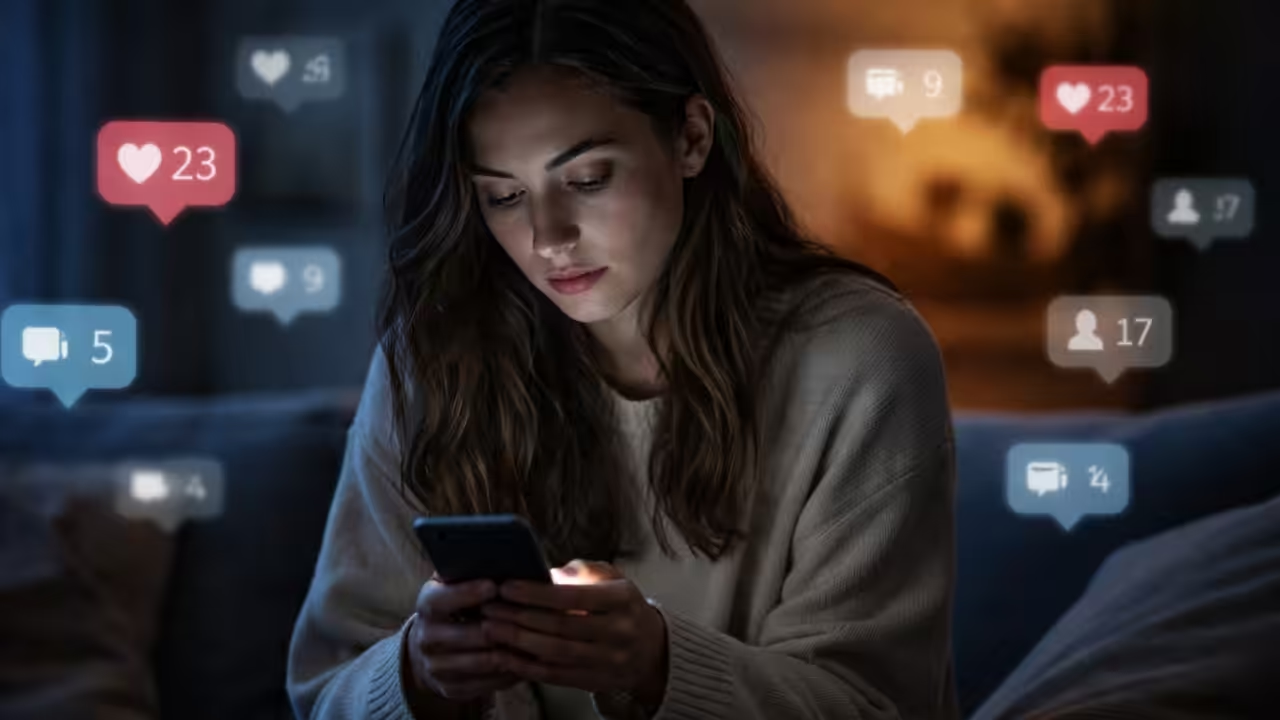
Digital technology has transformed how people communicate. Smartphones, messaging apps, video calls, and social media platforms allow individuals to stay connected throughout the day. Conversations that once required face-to-face meetings now happen instantly via screens, making communication faster and more accessible than ever before.
Despite this unprecedented level of connectivity, researchers and public health organizations report that loneliness remains a growing concern. Many individuals maintain large online networks but still feel socially disconnected. This contrast between constant digital contact and emotional isolation has drawn the attention of psychologists, sociologists, and health experts studying how modern communication influences human relationships.
Table of Contents
Loneliness is Not Simply Being Alone
Loneliness refers to the feeling that a person’s social relationships are less meaningful or supportive than they desire. A person may interact with many people every day but still feel lonely if those interactions lack emotional depth or understanding.
Public health agencies increasingly consider loneliness a social and health issue. The Centers for Disease Control and Prevention explains that strong social connections are important for mental and physical well-being
Research summarized by the agency indicates that long-term social isolation can increase stress and affect overall health. Because of these impacts, researchers are examining how modern communication habits influence feelings of social connection.
Rapid Expansion of Digital Communication
Over the past two decades, digital connectivity has grown dramatically. Internet access, smartphones, and social media platforms have allowed billions of people to communicate instantly across long distances.
Global statistics illustrate how quickly digital communication has expanded.
| Indicator | Early 2000s | Mid-2020s |
|---|---|---|
| Global internet users | Under 1 billion | Over 5 billion |
| Social media users worldwide | Limited adoption | More than 4.5 billion |
| Average daily time online | Around 2 hours | About 6–7 hours |
| Smartphone ownership worldwide | Under 15% | Over 70% |
Global technology data compiled by the International Telecommunication Union (ITU) can be accessed through its official statistics portal. While these technologies make communication easier, they also change how relationships are built and maintained.
Why Digital Communication Can Feel Less Personal
Human communication involves more than words. Facial expressions, body language, and tone of voice all contribute to emotional understanding during conversations. When communication occurs primarily through text messages or short online comments, many of these signals disappear.
As a result, digital interactions can sometimes feel less personal than face-to-face conversations. Quick replies or emoji reactions help maintain contact but may not offer the emotional depth of longer discussions.
Digital platforms also encourage fast communication. Notifications, instant messaging, and short posts promote rapid exchanges rather than extended conversations. While this efficiency helps people stay in touch, it may limit opportunities to build deeper emotional connections.
Digital Habits Linked to Social Isolation
Researchers studying online behavior have identified several habits that may influence feelings of loneliness. These patterns appear frequently in studies examining digital communication and emotional well-being.
Some common behaviors include:
- Spending long periods passively scrolling through social media without interacting
- Replacing in-person meetings with digital messaging
- Comparing everyday life with idealized images shared online
- Maintaining large online networks with limited personal closeness
These habits affect people differently, but they show that interaction quality is often more important than communication quantity.
Social Media and the Psychology of Comparison
Social media platforms often showcase highlights of people’s lives, such as celebrations, achievements, and travel experiences. Although these posts represent real events, they reflect selected moments rather than everyday life.
Repeated exposure to curated content can encourage social comparison. Individuals may evaluate their own lives against these carefully chosen images, which can influence self-perception and satisfaction. The World Health Organization notes that social relationships play a crucial role in mental health.
| Online Behavior | Description | Possible Impact |
|---|---|---|
| Passive browsing | Viewing posts without interaction | Increased social comparison |
| High daily screen time | Spending many hours online | Reduced face-to-face interaction |
| Approval-focused posting | Seeking likes and reactions | Sensitivity to social feedback |
| Limited offline activity | Few real-world gatherings | Higher risk of isolation |
Loneliness Across Different Age Groups
Research suggests that loneliness affects people across age groups in different ways. Younger adults often report higher levels of loneliness in surveys, even though they are among the most active users of social media and digital communication tools.
One possible explanation is that online interaction sometimes replaces direct social experiences. Messaging apps and social networks maintain contact with peers, but they may not always offer the emotional depth of in-person conversations.
Older adults face different challenges, including smaller social circles or reduced mobility. For many individuals in this group, digital communication can actually reduce loneliness by helping them stay connected with family members and communities.
These divergent experiences demonstrate that the influence of technology primarily hinges on its application in everyday life.
Balancing Technology and Human Connection
Loneliness in the digital age reflects a complex relationship between technology and human social needs. While digital tools have expanded opportunities for communication, they have also changed how relationships develop and how people experience connection.
Health professionals stress that significant relationships depend on authentic engagement, collective experiences, and community involvement. Digital communication can support these relationships when it complements, rather than replaces, real-world interaction.
As societies continue to adapt to rapidly evolving technology, maintaining a balance between online connectivity and personal engagement may be essential to strengthening social well-being in the modern world.