For most of his adult life, Luke Taylor believed he was dealing with severe migraines. The pain would come in waves, sometimes manageable, but often so intense that it forced him to stop everything. There were days when the headaches brought nausea, blurred vision, and exhaustion that lingered long after the pain faded. Over time, these episodes became a part of his routine, something he tried to work around rather than question.
Like many people experiencing chronic symptoms, he sought medical help repeatedly. Each time, he left with reassurance. He was young, otherwise healthy, and his symptoms were interpreted as migraines, which are common, treatable, and not immediately alarming. But the pain never truly eased. Instead, it slowly escalated, becoming more disruptive and harder to ignore.
By his mid-20s, the situation had reached a point where normal explanations no longer felt convincing. What had once been dismissed as routine headaches had turned into something that was beginning to affect every aspect of his life, his work, his energy, and his ability to be present with his family.
Table of Contents
Years of Symptoms That Never Felt “Normal”
Luke later shared that he had been dealing with these headaches for nearly a decade. They were frequent and severe. At times, the pain was so overwhelming that it left him physically sick. He would spend hours or even days recovering, waiting for the episode to pass before he could return to his daily responsibilities.
Despite this, there was a pattern in how his concerns were handled. The symptoms were viewed in isolation rather than as part of a larger, evolving condition. Migraines were considered the most likely explanation, and no deeper investigation was initially pursued.
What makes this period especially significant is how common such experiences can be. Many individuals with long-term symptoms find themselves balancing trust in medical advice with their growing sense that something is not right. In Luke’s case, that internal doubt marked a pivotal moment.
The Decision That Changed Everything
In July 2025, Luke reached a moment where continuing as before no longer felt possible. The headaches had intensified and were becoming more frequent. This time, instead of accepting reassurance, he insisted on further testing. He specifically requested an MRI, convinced they might have overlooked something more serious.
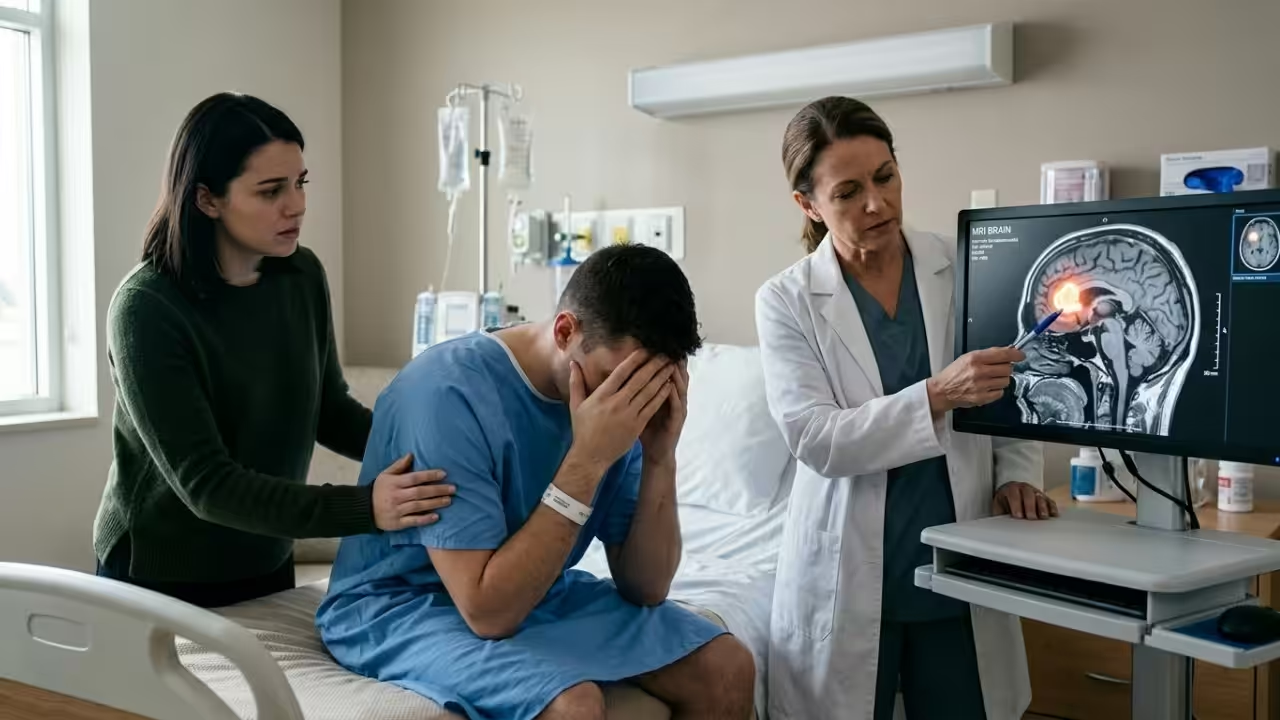
That decision proved critical. The scan revealed a hemangioblastoma, a rare, non-cancerous brain tumor, located in the cerebellum. This part of the brain plays a key role in balance, coordination, and motor control. Although the tumor was benign, its size and location made it extremely dangerous.
The diagnosis came with immediate urgency. The tumor had grown significantly, and pressure inside his skull was increasing. Doctors informed him that without rapid surgical intervention, the situation could become fatal within days.
Facing a Life-Threatening Reality Overnight
The emotional impact of that moment was overwhelming. Only days earlier, Luke had been trying to manage what he believed were migraines. Now, he was being told that his life was at risk and that emergency surgery was the only option.
At just 26, with a young daughter and a future he had only begun to build, the news was difficult to process. He later described how quickly everything changed from routine medical visits to preparing for a major brain operation in a matter of days.
The tumor itself had reached a size larger than a golf ball. In neurological terms, this is significant, as even small growths can disrupt vital brain functions. Larger tumors can increase intracranial pressure, compress surrounding tissue, and interfere with coordination, vision, and basic bodily functions.
A Nine-Hour Surgery and an Uncertain Outcome
Within a week of his diagnosis, Luke underwent a complex nine-hour operation to remove the tumor. Neurosurgery of this kind requires extreme precision, as surgeons must remove the growth while preserving surrounding brain structures.
For his family, the hours during surgery were filled with uncertainty. His partner, Nia Jones, remained by his side throughout the process, even as the possibility loomed that the outcome might not be what they hoped for.
The operation was successful in removing the tumor, but the journey did not end there. Recovery from brain surgery is often unpredictable, and complications can arise even after a procedure appears to have gone well.
A Second Emergency That Tested Everything Again
Shortly after the first surgery, Luke began showing concerning signs. His speech became slurred, his behavior changed, and he struggled to open his eyes. These symptoms indicated that something was wrong.
Doctors soon identified bleeding in the brain as a serious complication that required immediate attention. He was taken back into surgery for a second emergency procedure.
For his partner, the incident was one of the most distressing moments of the entire experience. Watching someone recover, only to suddenly deteriorate again, can be emotionally overwhelming. It brought back the same fear they had faced just days earlier.
Recovery That Meant Starting From the Beginning
Luke spent nearly three weeks in the hospital. When he was finally discharged, the hardest part was still ahead. The surgeries had saved his life, but they had also left him needing to rebuild basic abilities.
He had to relearn how to walk steadily, speak clearly, and coordinate his movements. Everyday actions, such as getting dressed, eating, and even holding objects, required effort and support. Nia played a crucial role during this time, helping him with tasks that had once been automatic.
Recovery after brain surgery is not only physical but also emotional. It requires patience, resilience, and a willingness to progress step by step. For Luke, each small improvement became a milestone, evidence that he was moving forward, even if slowly.
The Moment That Brought Relief
Months later, in November 2025, Luke received the news he had been waiting for. Follow-up assessments confirmed that the tumor had been completely removed. After everything he had endured, the years of symptoms, the surgeries, and the long recovery, the result brought a deep sense of relief.
He described the moment as overwhelming, saying he cried when he heard the confirmation. It was not just about survival but about finally having clarity and hope for the future.
However, his journey continues in another form. He is now scheduled for regular monitoring, with scans every six months for the next decade. This ongoing follow-up is a standard approach in such cases, ensuring that any recurrence is detected early.
Turning a Personal Battle Into Purpose
Rather than leaving the experience behind, Luke and Nia chose to use it to support others. They are preparing to take part in the Yorkshire Three Peaks Challenge, a demanding physical event aimed at raising funds for The Brain Tumour Charity.
This decision reflects a shift from survival to purpose. By sharing their story and participating in fundraising efforts, they hope to raise awareness about brain tumors and the importance of listening to persistent symptoms.
Their message is simple but meaningful: early investigation can make a critical difference, and persistence in seeking answers can save lives.
A Story That Reflects a Larger Reality
Luke’s experience highlights a broader issue that extends beyond one individual case. Brain tumors, especially rare ones like hemangioblastomas, can present with symptoms that overlap with more common conditions. Headaches, nausea, and fatigue are often attributed to less serious causes, particularly in younger individuals.
However, when such symptoms persist, worsen, or change in pattern, further evaluation becomes important. Early detection can significantly improve outcomes, reducing the risk of complications and the need for emergency interventions.