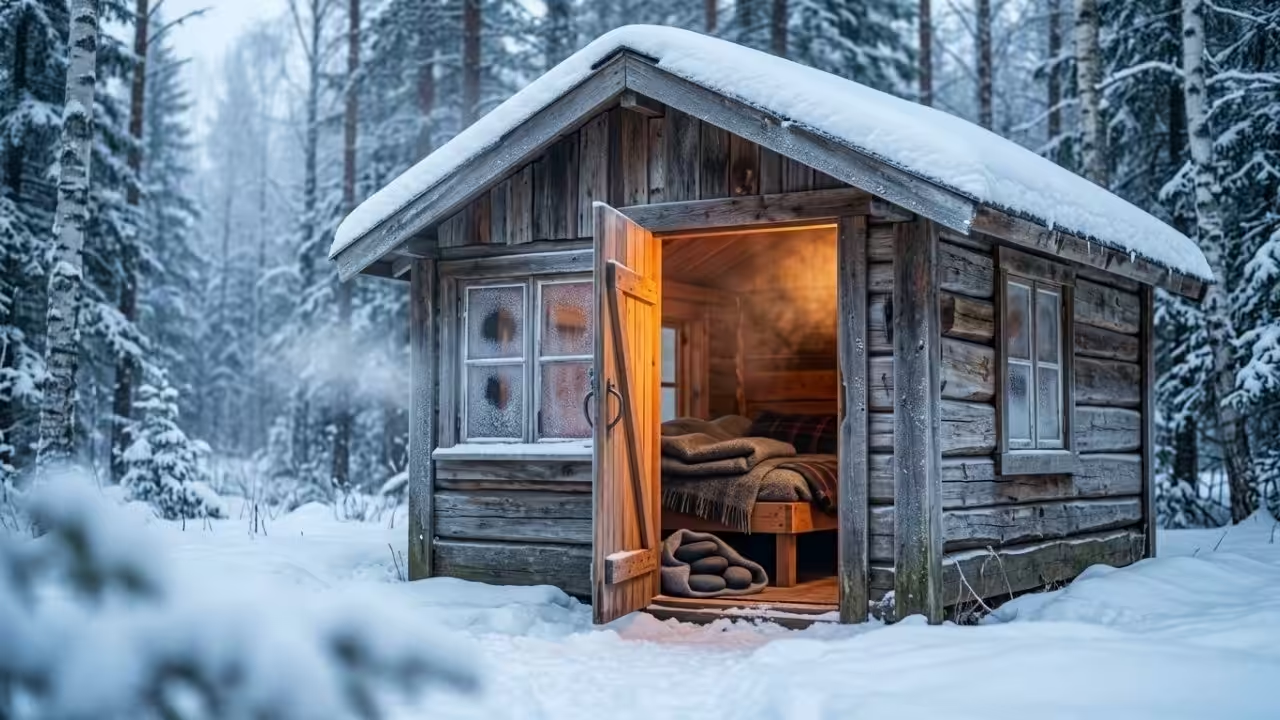
Some mornings in Wisconsin begin in silence, but not the peaceful kind. It is the kind of place where the cold feels alive. I wake up inside a tiny home with no insulation, no running water, and no electricity. The air bites instantly. There is no switch to flip, no heater humming in the background, no quick way to escape the temperature. For many people, that sounds unbearable. For me, it has become normal.
I did not arrive at this life overnight. There was a time when I wanted something entirely different. I once believed success meant money, security, and reaching financial goals as quickly as possible. I even set a personal target to become a millionaire by the age of 30. Back then, I measured progress in numbers. Today, I measure it by how well it aligns with my goals, my beliefs, and my daily life.
Living this way, especially through Wisconsin winters, has forced me to understand both discomfort and meaning more deeply. What might seem extreme from the outside has slowly become something that feels real, grounded, and planned from the inside.
Table of Contents
How I Stay Warm Without Insulation or Electricity
The first question people usually ask me is simple: how do you survive the cold?
The answer is not one single trick. It is a system of small, intentional actions that I repeat every day. One of the most important methods I use is heating stones. I warm the rocks near a fire, then place them in my bed before sleeping. Combined with thick wool blankets, they hold heat surprisingly well through the night. It is not the same as central heating, but it works.
During the day, staying warm requires movement and preparation. I chop wood, manage my fire carefully, and layer my clothing. There is no moment when I can ignore the cold completely. I have to stay aware of it, work with it, and respect it.
What I have learned is that warmth is not just something you turn on. It is something you create. It comes from effort, from routine, and from understanding your environment instead of trying to control it completely.
My Days Are Built on Effort, Not Convenience
In a typical modern life, many tasks happen instantly. You press a button, and something happens. You need water, you open a tap. You need food, you buy it. You need warmth, you adjust a thermostat.
My days look very different.
Nothing in my routine is automatic. If I want heat, I have to build and maintain a fire. If I need water, I have to collect it. If I want food, I often have to gather or prepare it from scratch. Each task takes time, energy, and focus.
At first, this kind of life felt demanding. It required constant attention. But over time, something shifted. I stopped seeing these tasks as burdens and started seeing them as connections. Every action ties me directly to my needs. I know where my food comes from. I understand how my warmth is created. I feel the effort behind everything I use.
It is a slower way of living, but it is also a more conscious one.
The Moment My Thinking Began to Change
I was not always this person. Years ago, my goals were centered around financial success. I believed that earning more money would solve most problems and create the life I wanted.
Then, around 2011, I started learning more about environmental issues, overconsumption, and the impact of modern lifestyles. The more I learned, the more uncomfortable I became. I discovered that my daily habits contradicted my emerging beliefs.
Instead of making one big, dramatic change, I decided to take a different approach. I committed to making one positive change each week. That process continued for two years. Week by week, my habits began to shift. Over time, those small changes entirely changed the direction of my life.
What I discovered is that change does not need to be sudden to be powerful. Slow, consistent adjustments can reshape everything.
When My Life Reached Millions Online
At one point, I shared a video of my tiny home during winter. I showed how I live, how I stay warm, and what my daily routine looks like. I did not expect what happened next.
The video reached millions of people.
The reactions were intense and mixed. Some people were inspired. Others were shocked. Many could not believe that someone would choose to live this way in such extreme conditions. I read comments from people who admired the simplicity and others who questioned whether it was even real.
What stood out to me was neither the praise nor the doubt. It was the reflection. I saw people beginning to question their lives. They were wondering what they needed, what they were used to, and what they could change.
That, to me, was the most meaningful outcome.
Why I Focus on Skills Instead of Money
People often assume that my lifestyle is about rejecting money completely. That is not exactly how I see it.
For me, it is more about reducing dependence on money by increasing my skills. Instead of paying for everything, I try to learn how to meet my needs directly. That might mean growing food, repairing items, or finding ways to live with less.
This approach changes the way I think about value. Time becomes more important than speed. Effort becomes more meaningful than convenience. I’m beginning to see that many things I used to buy can actually be made, learned, or shared.
It is not always easier. In fact, it is often harder. But it feels more honest. It feels like I am participating in my life instead of outsourcing it.
The Year I Tried to Live Only on Foraged Food
One of the most challenging experiences I have taken on is foraging for all my food and medicine for an entire year.
This is not a simple lifestyle experiment. It requires deep knowledge of plants, seasons, and ecosystems. I have to know what is safe to eat, when it grows, how to preserve it, and how to prepare it. Every meal takes planning and effort.
What surprised me the most was how natural it felt after several months. Grocery stores stopped feeling essential. I began to trust the land more and understand its rhythms.
The biggest challenge was not the food itself. It was time. Gathering, preparing, and managing everything without modern shortcuts demands constant attention. But even with that challenge, the experience has been one of the most grounding parts of my life.
Why This Life Feels Meaningful to Me
From the outside, my lifestyle can look extreme. I understand that. Not everyone wants to live without electricity or running water. And I am not suggesting that everyone should.
But what I have found is that simplicity creates clarity.
When life is stripped down to its essentials, it becomes easier to see what truly matters. I spend more time understanding my needs and less time chasing unnecessary things. I feel more connected to the natural world and more aware of how my actions impact it.
Meaning, for me, does not come from comfort. It comes from alignment. It comes from knowing that my choices reflect my values.
How People React – And What I Learn From It
Not everyone supports or understands my way of living. Some people are skeptical. Some think it is unrealistic or unnecessary. Others believe it is too extreme to have any real value.
I listen to those perspectives because they are part of the conversation.
But I have also noticed something important. Even people who disagree often become curious. They start asking questions. They begin to think about their own habits and assumptions.
That curiosity matters. It shows that even if someone does not want to live like me, they are still open to reflecting on their own life. And that reflection can lead to meaningful change, even in small ways.
What I Hope Others Take From My Story
I do not expect people to copy my lifestyle. Living in an uninsulated tiny home through freezing winters is not something most people will choose, and that is completely fine.
What I hope is much simpler.
I hope people start asking themselves what they truly need. I hope they consider where their food comes from, how they use energy, and whether their daily habits align with their values. Even small changes can make a difference.
Living simply does not have to mean living extremely. It can mean reducing waste, consuming less, learning new skills, or reconnecting with nature in small ways.